News and Reports | March 17, 2026
Analysis is part of a new series on Pharma-driven price hikes of essential medicines
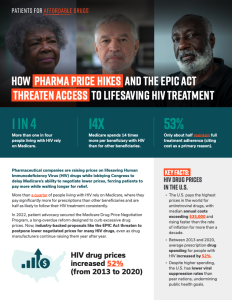
WASHINGTON, D.C. — A new analysis from Patients For Affordable Drugs spotlights a troubling pattern: pharmaceutical companies are raising prices on HIV medications, while simultaneously lobbying Congress to pass the harmful EPIC Act, which would delay Medicare drug price negotiations that could lower prices on those same drugs.
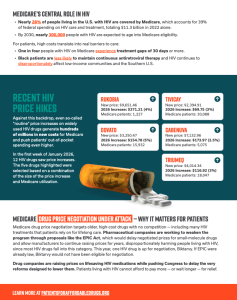
P4AD’s analysis highlights five of the most significant price hikes on HIV medications, which occurred during the first week of January, including Rukobia, Cabenuva, Dovato, Triumeq, and Tivicay. Rukobia was increased by $371 for a 60-day supply, while Dovato, Triumeq, Cabenuva, and Tivicay increased by $155, $117, $174, and $70, respectively, for a 30-day supply.
At the same time, the pharmaceutical industry continues pushing Congress to pass the EPIC Act, which would delay when small-molecule drugs — roughly 90% of the drugs currently on the market — become eligible for Medicare price negotiation by four years. The majority of HIV medications are small-molecule drugs, which means EPIC would significantly delay lower prices for many patients living with HIV.
“Not only is Big Pharma continuing to price-gouge patients living with HIV, but the industry also wants Congress to undermine Medicare’s ability to lower prices in the future by delaying negotiation even further,” said Merith Basey, CEO of Patients For Affordable Drugs. “The EPIC Act would hand pharmaceutical companies four more years to charge patients whatever they want.”
More than one in four of the roughly 1.2 million Americans living with HIV rely on Medicare for their health coverage. Medicare also spends 14 times more per beneficiary with HIV than for other beneficiaries, making Medicare drug price negotiation especially important for these patients. Delaying negotiation for HIV drugs wouldn’t just continue to harm people living with the condition — it would also funnel even more taxpayer dollars to pharmaceutical companies.
For patients in our community, the high cost of HIV medications already creates significant financial strain:
Robert from California: “My drug prices are astronomical. They seem to increase as I age because HIV is a symptom that creates more symptoms. There are no generic options. Quite honestly, if I lose my Medicare, I am going to die.”
Jeffrey from New York: “I take Dovato for HIV, and if it wasn’t for state programs and manufacturers’ coupons to help, I wouldn’t be here.”
Biktarvy, the one HIV drug selected for negotiation in round three of the program, was only able to be included because the EPIC Act isn’t currently law. Had it been, that negotiation would have been delayed by four years.
None of the HIV drugs hiked this January are currently subject to Medicare negotiation — but could be in the future. The program, established by the Inflation Reduction Act, will negotiate up to 20 drugs each year, reaching a total of 60 by 2029. The EPIC Act would force patients to wait four additional years for lower prices while manufacturers continue raising prices on their medications in the meantime.
This analysis is part of a series examining how pharmaceutical companies are hiking prices on lifesaving medications across disease areas — including cancer and rare diseases — while lobbying Congress to delay the reforms designed to lower them. Read the full analysis here.
Methodology: P4AD analyzed the wholesale acquisition cost (WAC) data for 487 unique National Drug Codes (NDCs) with price hikes greater than 1% between January 1 and January 5, 2026.
###
Patients For Affordable Drugs is the only national patient advocacy organization focused exclusively on policies that lower prescription drug prices. We empower and mobilize patients by amplifying their experiences with high drug prices to hold those in power to account and fight to shape and achieve system-changing policies that make prescription drugs affordable for all people in the United States. P4AD does not accept funding from organizations that profit from the development and distribution of drugs. To learn more, visit PatientsForAffordableDrugs.org.